Ancient History in Bulgaria’s Second-Largest City, Plovdiv
Plovdiv is one of those cities that’s very easy to fall in love with. It has ancient ruins, colourful Revival-era houses, cobbled streets, excellent restaurants and a creative district filled with cafés, bars and independent shops.
It’s also one of the easiest places to visit from Sofia. You can comfortably see the main sights on a day trip, although staying for at least one night gives you time to enjoy the city in the evening.
Plovdiv is often described as one of the oldest continuously inhabited cities in Europe. Over thousands of years, it has been home to Thracians, Romans, Byzantines and Ottomans, and evidence of that history is scattered throughout the modern city.
One moment you’re walking along a busy shopping street and the next you’re looking down into an ancient Roman stadium. That combination of old and new is a large part of Plovdiv’s charm.
Getting From Sofia to Plovdiv
Plovdiv is around 145 kilometres southeast of Sofia and can be reached by bus, train or car.
Each option has its advantages. The bus is usually straightforward and reasonably quick, the train gives you more space to move around, and driving offers the most flexibility.
Sofia to Plovdiv by Bus
Buses to Plovdiv leave regularly from Sofia Central Bus Station, located beside Sofia Central Railway Station.
The journey generally takes around two to two and a half hours, depending on traffic and the number of stops. Tickets usually cost approximately €9–€10 each way.
Several companies operate this route, including Union Ivkoni, Karat-S and Citylines. You can buy tickets at the bus station, through the individual bus company or using an online booking platform.
Most services arrive at either Plovdiv South Bus Station, which is beside the railway station, or Plovdiv North Bus Station. Check the arrival station when booking because they are in different parts of the city.
From the South Bus Station, it takes around 20 minutes to walk to the beginning of Plovdiv’s main pedestrian area. You can also take a taxi or local bus.
For a day trip, I recommend booking your return journey in advance, particularly at weekends or during holiday periods. It removes the worry of arriving at the station and discovering that the bus you wanted is full.
Sofia to Plovdiv by Train
Trains leave from Sofia Central Railway Station and arrive at Plovdiv Central Railway Station.
Journey times vary considerably. Faster services generally take around two and a half to three hours, while slower trains can take longer. It’s worth checking the duration carefully before buying your ticket because the fastest-looking departure time doesn’t always mean the fastest journey.
Train travel in Bulgaria is very affordable, with a standard second-class ticket generally costing only a few euros. The exact fare depends on the train and ticket type, so check the current price through the BDZ website or at the station.
Tickets can be purchased online, although you may need to create an account, or from the ticket office at Sofia Central Railway Station. If you’re travelling on a fast train, your ticket may include or require a seat reservation.
The train is a good option if you prefer more space, want to get up and move around during the journey or simply enjoy travelling by rail. The scenery becomes more attractive as you leave Sofia behind and travel towards the Thracian Plain.
However, Bulgarian trains are not always the fastest or most punctual, so I wouldn’t plan an extremely tight itinerary around them.
Plovdiv Railway Station is next to the South Bus Station and around a 20-minute walk from the central pedestrian area.
Driving From Sofia to Plovdiv
Driving is the quickest and most flexible option.
The journey follows the A1 Trakia Motorway and usually takes around one hour and 45 minutes, although Sofia traffic can add considerably to the journey, particularly on Friday afternoons and before long weekends.
You’ll need a valid Bulgarian electronic vignette to use the motorway. If you’re driving a rental car, check whether the vignette is already included, as it usually is.
Parking in central Plovdiv can be challenging. Parts of the centre operate as a paid Blue Zone, while vehicle access in the Old Town is restricted. The steep cobbled streets are also not somewhere I’d particularly want to navigate while searching for a parking space!
The easiest solution is to use a public car park or choose a hotel with parking and explore the centre on foot.
What to See in Plovdiv
Most of Plovdiv’s main attractions are within walking distance of one another. Wear comfortable shoes because the Old Town is hilly and many of its streets are paved with uneven cobblestones.
The Ancient Roman Theatre
Plovdiv’s Roman Theatre is the city’s most famous landmark and one of the best-preserved ancient theatres in the world.
Built into the hillside between two of Plovdiv’s historic hills, it has a wonderful view over the city and the mountains beyond. The theatre is still used for concerts, opera and other performances, which must be a rather spectacular way to experience it, although I’ve never been.
You can see part of the theatre from the street above, but it’s worth buying a ticket and going inside if you have time.
Plovdiv Old Town
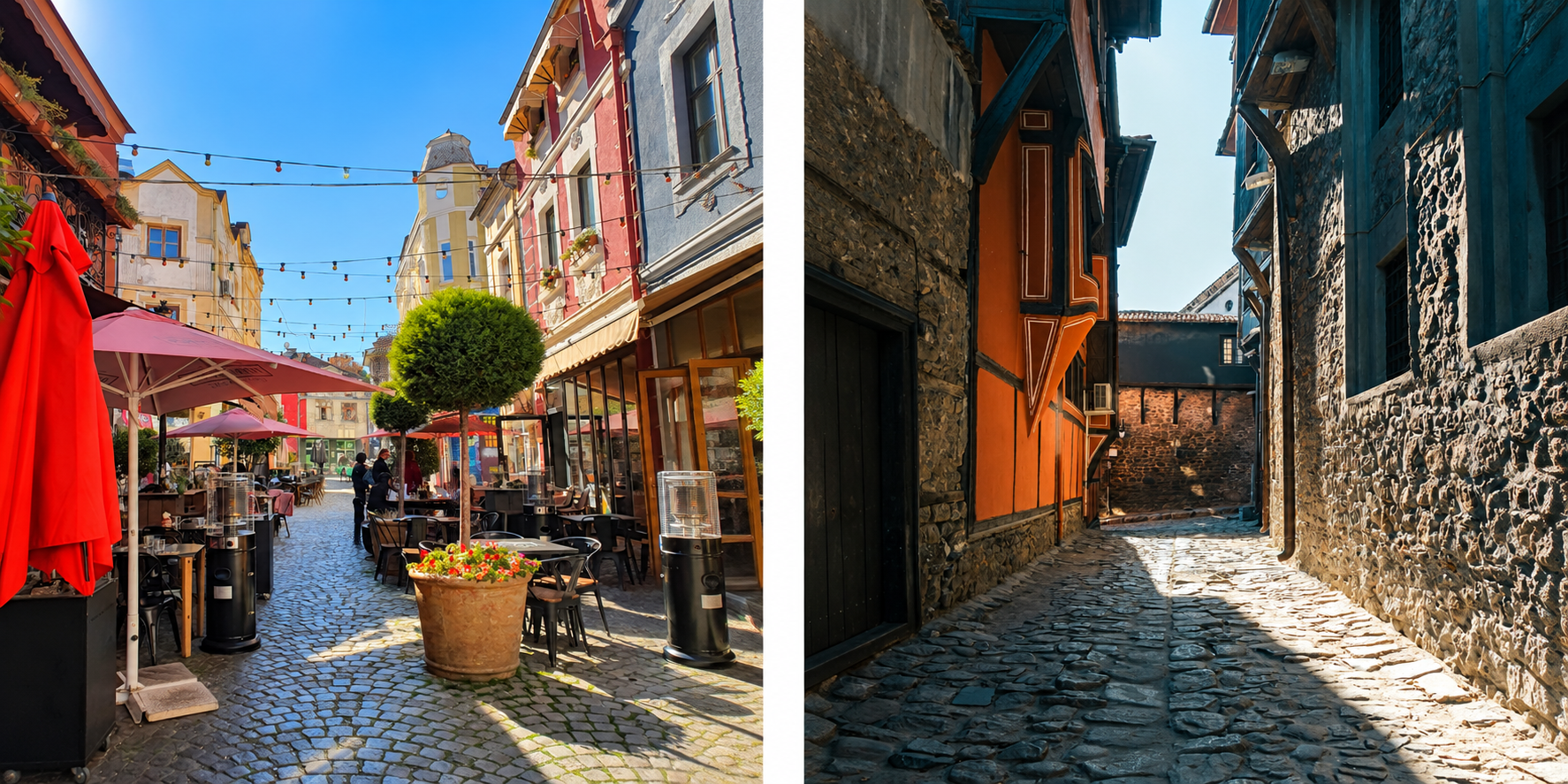
Plovdiv’s Old Town is a maze of cobbled streets, traditional houses, museums, galleries and small churches.
Many of the grand houses were built during the Bulgarian National Revival period and are painted in rich colours, with decorative façades and overhanging upper floors. Several are now open as museums, allowing you to see their beautifully preserved interiors.
Even if you don’t visit every museum, simply wandering through the Old Town is one of the best things to do in Plovdiv.
Don’t try to follow too rigid an itinerary here. Allow yourself to explore the side streets, peer through open gateways and stop whenever something catches your attention.
Hisar Kapia
Hisar Kapia is one of the most recognisable sights in the Old Town.
The medieval gateway was built into the remains of Plovdiv’s ancient fortifications and is surrounded by some of the city’s most beautiful Revival-era houses. It’s an especially photogenic part of the city, although you may need a little patience if you want a photograph without anyone walking through it.
Nebet Tepe
Continue uphill through the Old Town and you’ll eventually reach Nebet Tepe.
This is one of Plovdiv’s seven hills and the site of some of the city’s earliest settlements. Today, people come here for the archaeological remains and the panoramic views across Plovdiv.
It’s a lovely place to stop for a while, particularly towards sunset.
The Roman Stadium
The remains of Plovdiv’s Roman Stadium sit beneath the main pedestrian street.
Only part of the stadium is visible at Dzhumaya Square, but the contrast between the ancient stone seating and the busy modern city surrounding it is quite remarkable.
It’s free to look down into the excavated section, making this an easy stop as you walk between the Old Town and the pedestrian centre.
Dzhumaya Mosque
Beside the Roman Stadium is Dzhumaya Mosque, one of the city’s most important Ottoman-era buildings.
Its position directly beside the Roman ruins is another example of Plovdiv’s many layers of history sitting side by side.
Visitors can usually enter outside prayer times, but remember that it is an active place of worship. Dress respectfully and follow any instructions at the entrance.
Kapana Creative District
Kapana means “the trap”, supposedly because its network of narrow streets was once so easy to get lost in.
Today it is Plovdiv’s creative quarter, filled with cafés, restaurants, bars, galleries, street art and independent shops. It’s one of the best areas to stop for lunch, dinner or a drink.
Kapana becomes particularly lively in the evening, which is one of the reasons I recommend staying overnight if you can.
The Main Pedestrian Street
Knyaz Alexander I Street is Plovdiv’s main pedestrian shopping street and one of the longest pedestrianised streets in Europe.
It connects many of the city’s central sights and is lined with shops, cafés and attractive buildings. It’s usually busy, but the atmosphere is relaxed and there are plenty of places to sit and watch the world go by.
At the southern end, the street continues towards Tsar Simeon’s Garden.
Tsar Simeon’s Garden and the Singing Fountains
Tsar Simeon’s Garden is a peaceful green space near the centre of Plovdiv. It’s a pleasant place to rest after walking around the Old Town, particularly during the warmer months.
The garden is also home to the Singing Fountains, where evening shows combine illuminated fountains with music. Performance times can change according to the season, so check locally if you particularly want to see them.
The Bishop’s Basilica of Philippopolis
The Bishop’s Basilica is home to an extraordinary collection of early Christian mosaics.
The modern visitor centre has been constructed over the archaeological site, allowing you to walk above and alongside the mosaics while learning more about ancient Philippopolis, the Roman name for Plovdiv.
It’s one of the city’s newer attractions and well worth visiting, particularly if you’re interested in Roman or early Christian history.
How Long Do You Need in Plovdiv?
You can see Plovdiv’s main highlights on a day trip from Sofia, especially if you arrive early and are happy to do plenty of walking.
For a day trip, I would concentrate on:
- The Roman Stadium
- Kapana
- The Old Town
- The Roman Theatre
- Hisar Kapia
- Nebet Tepe
- The main pedestrian street
However, one or two nights will give you a much more relaxed experience. You’ll have time to visit some of the museums, enjoy dinner in Kapana and see the city early in the morning or evening when it is quieter.
Plovdiv also makes a good base for exploring places such as Bachkovo Monastery, Asen’s Fortress and some of the wineries in the surrounding Thracian Valley.
Getting Around Plovdiv
The historic centre is compact and best explored on foot. You won’t need public transport for most of the main sights.
Google Maps is helpful for navigating between attractions, although it doesn’t always account for just how steep or uneven some of the Old Town streets can be! Fortunately, the main tourist attractions are well signposted, making it easy to find your way around.
Taxis are inexpensive and useful if you’re travelling between the centre and the railway station, bus station or accommodation farther away. As elsewhere in Bulgaria, use a reputable taxi company or ask your hotel or restaurant to call one for you.
When Is the Best Time to Visit Plovdiv?
Spring and autumn are ideal for exploring Plovdiv. The weather is generally pleasant and walking around the hills is much more comfortable than during the hottest part of summer.
Summer can be very hot, with limited shade in some areas of the Old Town. If you visit in July or August, start early, carry water and plan a long lunch during the hottest part of the day.
Winter is quieter and the city can still be very atmospheric, although icy cobblestones and steep streets aren’t the best combination.
Is Plovdiv Worth Visiting?
Yep! It’s one of my favourite cities in Bulgaria.
Plovdiv has enough history and culture to fill several days, but it never feels like a city that needs to be rushed around with a checklist. Much of its appeal comes from simply wandering, through the Old Town, along the pedestrian street or between the colourful cafés and galleries of Kapana.
It’s beautiful, relaxed and very different from Sofia, despite being less than two hours away by car.
If you only have time to visit one city outside Bulgaria’s capital, Plovdiv would be very high on my list.
Research note: bus tickets are currently showing at about €9–€10, with journeys of roughly two to two and a quarter hours. Train times can vary and BDZ advises checking the specific service because schedules and fares depend on the selected date and train.
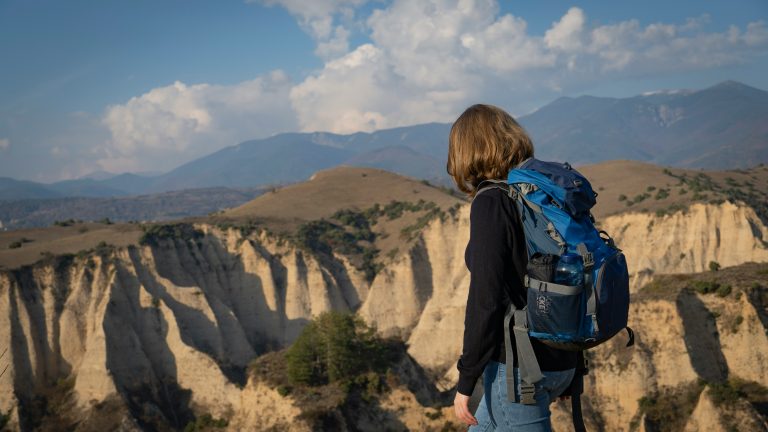
Photo by Yana Chuchuranova and Jean Carlo Emer on Unsplash